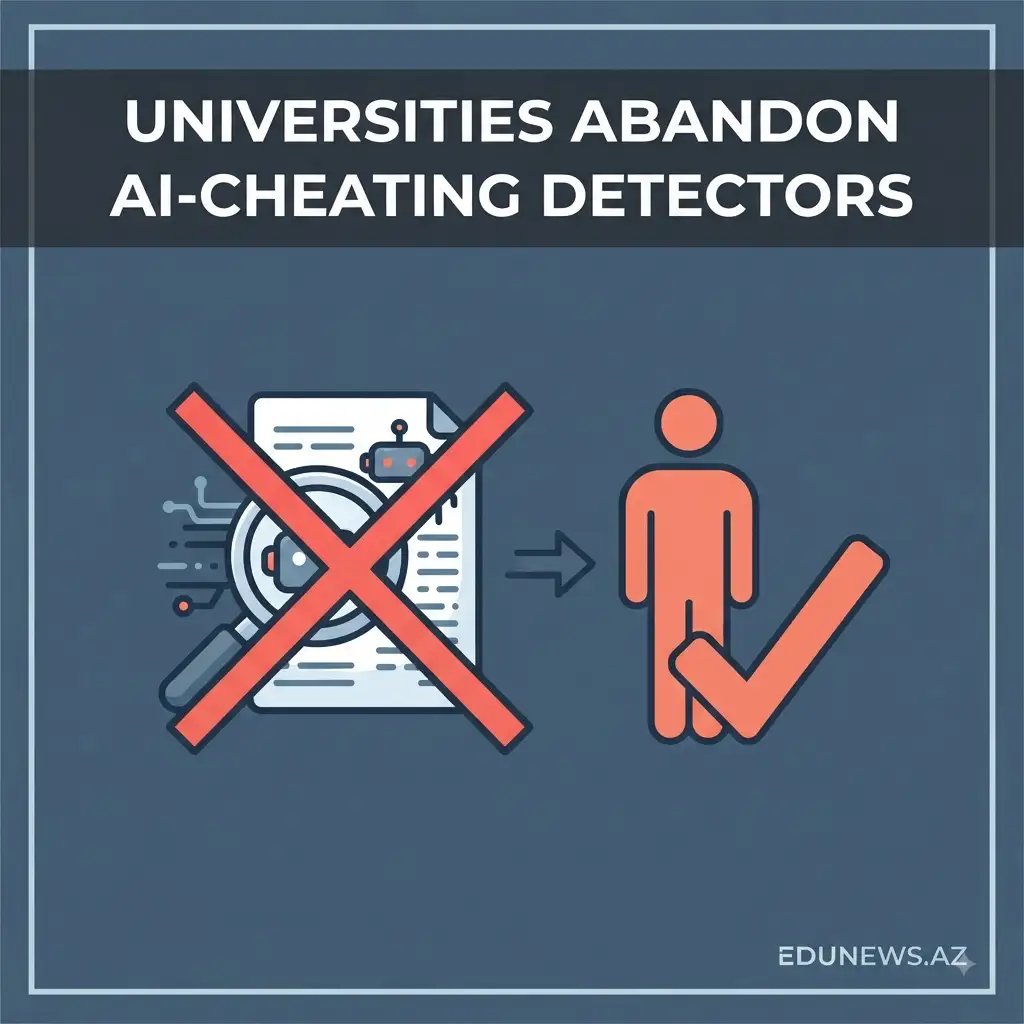
Over 50 Universities Worldwide Abandon AI-Cheating Detection Tools
More than 50 universities across the US, UK, Canada, Australia, and South Africa have formally banned, disabled, or officially discouraged the use of AI-detection software such as Turnitin and GPTZero for academic integrity cases, according to a running tally of institutional policy changes. The retreat includes 31 US institutions that have fully banned the tools, among them Vanderbilt, Yale, Washington State University, UCLA, UC Berkeley, and Johns Hopkins.
The universities cite remarkably consistent reasons: unacceptably high false-positive rates, systematic bias against non-native English writers, and no way to see how the tools reach their verdicts. A Stanford study found detectors misclassified 61.3% of TOEFL essays by non-native English speakers as AI-generated, and documented false-positive cases include a Liberty University student flagged while writing about her own cancer diagnosis and a Yale MBA student who sued the university after a year-long suspension based on a GPTZero score. Separately, Australian Catholic University reported nearly 6,000 AI-cheating allegations in a single year — about 90% of all academic integrity cases that year — with roughly a quarter of them later dismissed after review.
Rather than abandoning academic integrity enforcement altogether, universities say they are shifting away from treating a detector score as courtroom-grade evidence and toward redesigned assessments — oral components, in-class writing, and process tracking that shows how a piece of work was actually produced — alongside human review rather than automated flagging alone. A recent UK survey of more than 6,600 students across seven universities found 32% admitted to some unpermitted AI use in assessments, underscoring that the underlying problem the tools were meant to solve hasn't gone away even as confidence in the tools themselves has collapsed.
The trend adds important context to two other recent AI-and-exams stories: Mexico's UNAM cheating scandal, where AI-powered proctoring software itself became the center of controversy, and New York City's ongoing public pushback against its own AI rollout in schools — together painting a picture of institutions worldwide struggling to find AI-era testing and integrity tools that are both effective and fair.