
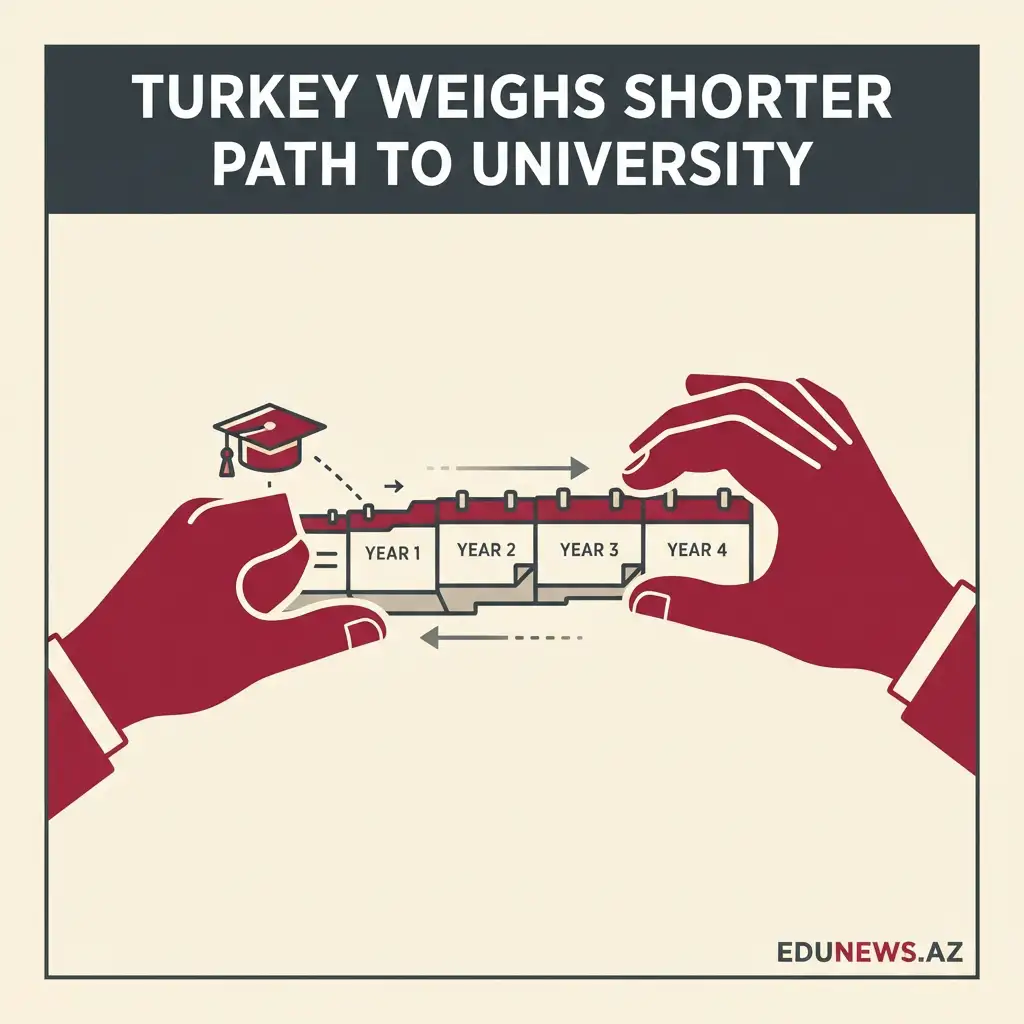
Turkey's Education Minister Signals Push to Shorten Compulsory Schooling, Enable Earlier University Entry
ANKARA — Turkey's Minister of National Education, Yusuf Tekin, has signaled a potential overhaul of the country's 12-year compulsory education model, aimed at lowering the age at which students can enter higher education. Speaking at the Turkish Grand National Assembly, Tekin argued that in an era where information is instantly accessible, the traditional length of primary and secondary schooling may no longer match how quickly students can actually be ready to move on.
Tekin was careful to frame the proposal as a change in timing rather than a reduction in compulsory education itself — the goal, he said, is "pulling the age of compulsory education to an earlier period," not shortening how many years students spend in school overall. The statement lands alongside other Turkish education headlines this year: a Human Capital Index report flagged that despite continued growth in higher education enrollment, underlying education and health quality metrics have lagged behind Turkey's broader economic growth, while separately, Turkish universities posted a strong showing in the Times Higher Education 2026 subject rankings, placing 44 institutions in the global top 1,000 for Education Sciences — third in Europe and fourth worldwide by that specific count.
The compulsory-education proposal remains at the signaling stage rather than confirmed policy, and no legislative timeline has been announced. For Azerbaijani observers, the debate is a useful parallel case: Turkey is grappling with the same underlying question several countries have faced this year — whether traditional school-duration models still make sense given how much students can now learn outside a fixed classroom timeline — a question Azerbaijan's own vocational-track and specialized-school reforms are implicitly wrestling with as well.