
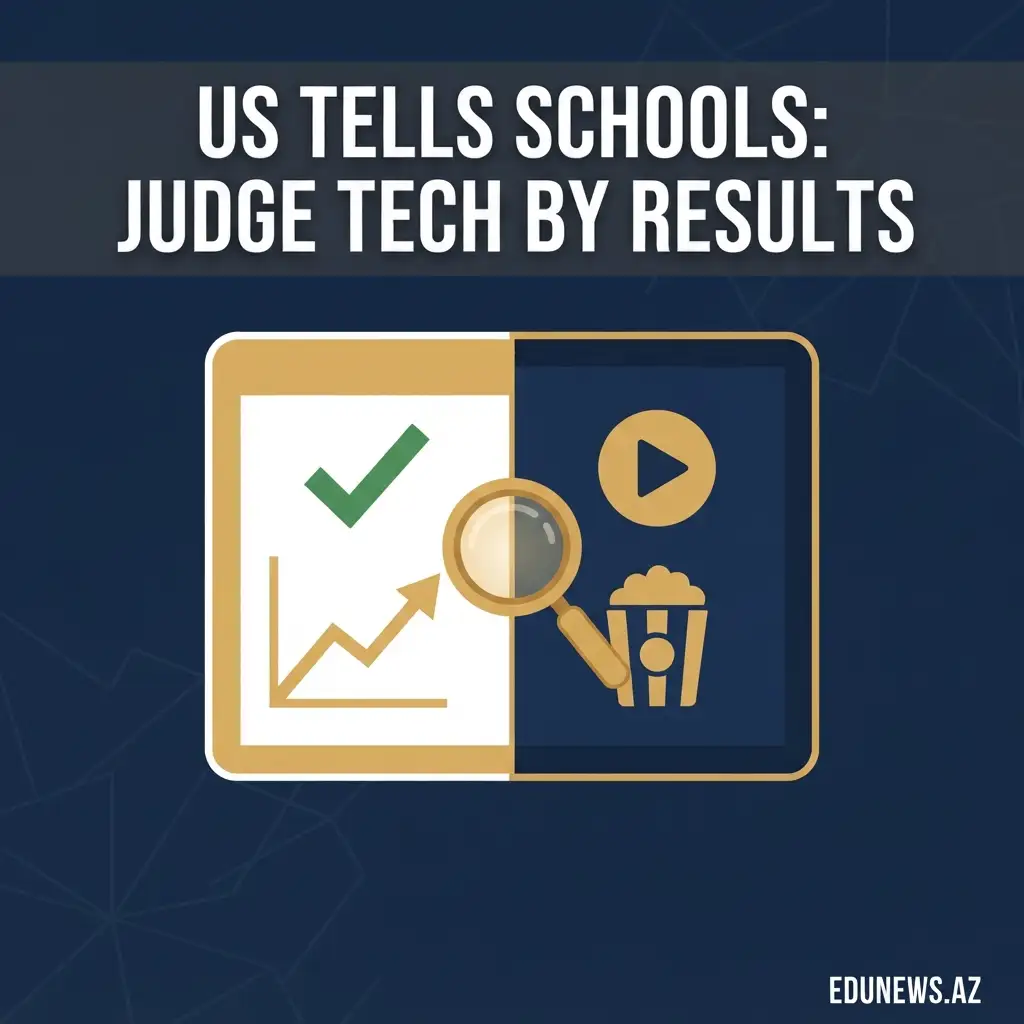
US Education Department Tells Schools: Judge Classroom Tech by Results, Not Screen Time
WASHINGTON — The US Department of Education issued new guidance August 20 telling states and school districts to evaluate classroom software on evidence of actual learning gains, not on how long students spend looking at a screen. The guidance draws a sharp line between two things that get lumped together in most screen-time debates: "recreational technology and education technology should not be viewed as synonymous," the six-page letter states.
The letter, signed by Assistant Secretary Kirsten Baesler, reframes the entire question schools should be asking. "The question should not be whether teachers and students use technology," it argues. "The question should be whether the technology we ask teachers and students to use improves learning and students' academic outcomes." That's a notably different starting point than the blanket screen-time restrictions gaining ground elsewhere — K-12 Dive reports at least six US states adopted classroom screen-time limits or bans in 2026, while Education Week counts lawmakers in more than a dozen states who supported similar bills this year, even though only a handful actually became law.
Rather than a ban, the guidance sets out five actions for states and districts and five for technology vendors, leaning on the existing evidence framework built into federal education law. It points specifically to outcomes-based contracting — payment models that tie what a district pays a vendor to whether the tool actually produces results — naming Louisiana, Arkansas, Indiana, Michigan, and Texas as states already experimenting with the approach. Baesler was careful to note that "the same tools that can distract during recreational use can also expand access to advanced courses, support students with disabilities, and help close learning gaps, when used wisely."
The guidance lands in the middle of a genuinely unresolved national argument: is the problem too much screen time, or the wrong kind of screen time? Washington's answer, at least for now, is the second one — asking districts to separate the two questions rather than treating every screen the same way. Whether individual states follow that framing, or keep moving toward blanket restrictions regardless of what's actually on the screen, will likely become clearer once this school year's data on both approaches starts coming in.