Azerbaijan Signs Its Second AI Deal With OpenAI — This Time, It's About the Teachers, Not Just the Platform
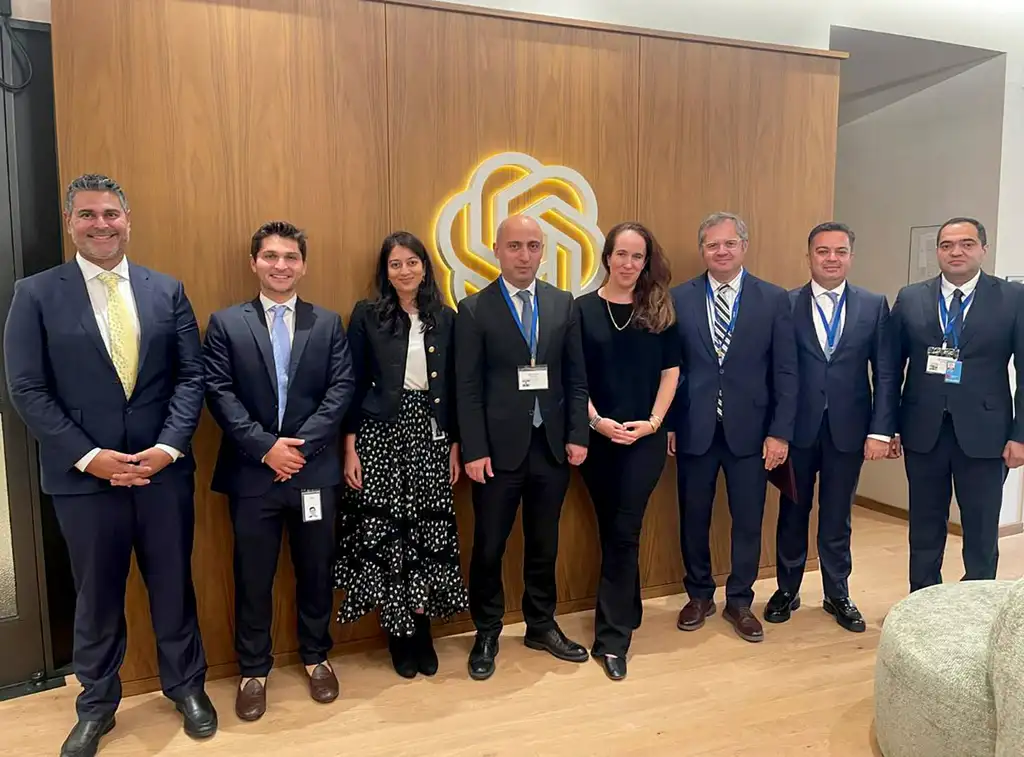
NEW YORK — Azerbaijan's Ministry of Science and Education and OpenAI signed a three-year Memorandum of Understanding today in New York, expanding a partnership between the two sides for the second time in under four months. Minister Emin Amrullayev and OpenAI's Vice President of Education, Leah Belsky, signed the agreement, which shifts the focus of the relationship from building a platform to building the people expected to actually use it.
The first MoU, signed in late May, was about infrastructure: a joint effort with Azerbaijan's Ministry of Digital Development and Transport to build an AI-based adaptive learning platform inside the national "Digital School" project, targeting diagnostic assessment, personalized assignments, and real-time AI tutoring for more than 500,000 students. That platform was explicitly framed as a pilot — start small, integrate with the national curriculum, expand gradually, with teacher oversight and data protection built in from the start rather than bolted on afterward. Today's agreement is the natural next step in that sequence: a "train-the-trainer" program specifically designed to build local Azerbaijani expertise in AI-assisted teaching, alongside joint development of a learning management system for mathematics, science, and reading built on OpenAI's models — plus, notably, the creation of formal standards and methodological guidelines for safe and responsible AI use in Azerbaijani schools.
That sequencing — platform first, then teacher training and formal standards — is worth reading against everything this site has tracked in Azerbaijan's AI-in-education policy conversation over the past several months. Minister Amrullayev warned in early September that unregulated AI use risked creating a genuine learning problem, then sharpened that position two weeks later, saying the real question "is not whether to use artificial intelligence, but how to use it." Today's MoU is the concrete institutional answer to that exact question: rather than leaving "how" to individual teachers figuring it out on their own — the dynamic that produced backlash in New York City and a formal government study panel in Japan, both covered on this site this year — Azerbaijan is building the training infrastructure and methodological standards directly into its partnership agreement with the AI company itself.
Azerbaijan isn't unique in pursuing this kind of national-level OpenAI partnership, and the regional context adds an interesting layer. OpenAI's "Education for Countries" initiative — the broader program this bilateral relationship sits inside — has signed comparable national agreements this year with multiple governments, including, just months ago, Armenia's own Ministry of Education, Science, Culture and Sport, covering AI access for 50,000 students, teachers, and researchers there. Two South Caucasus neighbors independently building national-scale partnerships with the same American AI company, within months of each other, is the kind of regional pattern that rarely gets remarked on directly but says something real about how quickly "does our country have a national AI-in-education strategy" has become a question every government in the region feels pressure to answer, rather than a niche policy interest only a handful of countries are pursuing.
There's a useful comparison point in how Azerbaijan's approach differs from the US model this site examined earlier this month, when the American Federation of Teachers negotiated a binding, contractually enforceable AI privacy and safety standard directly with Microsoft — a bottom-up, labor-union-driven mechanism built specifically because, as AFT president Randi Weingarten put it at the time, "no one else, including the federal government," had stepped up to set the rules. Azerbaijan's model runs in the opposite direction: government-to-company, negotiated directly by the Ministry rather than by a teachers' union, with standards development built into the partnership from the outset rather than won through separate negotiating leverage after adoption had already outpaced governance. Neither approach is obviously superior — the US teachers-union model produces genuinely binding, contract-enforceable protections but only after a gap period of ungoverned rollout; Azerbaijan's ministry-led model builds standards in from day one but concentrates that judgment inside a single government body rather than distributing it across a union representing the teachers who'll actually implement the policy day to day.
For a country that has spent much of 2026 actively rethinking multiple fundamental structural questions simultaneously — bachelor's degree length, AI integration versus a standalone subject, PISA-driven curriculum reform, tuition financing — today's OpenAI agreement fits a now-familiar pattern this site has documented repeatedly: Azerbaijan's Ministry treating major policy questions as interconnected pieces of a single, actively-managed strategy rather than addressing them one at a time in isolation. Whether the "train-the-trainer" approach and new AI-safety standards promised in today's MoU translate into the kind of measurable classroom impact Minister Amrullayev has repeatedly cautioned will take "10 to 15 years" to fully assess is, as with nearly every major policy move covered on this site this year, a question only time and the next several PISA cycles will actually answer.