Nigeria Moves to Scrap Junior-Senior Secondary Split After 20 Million Children Lost to Dropout
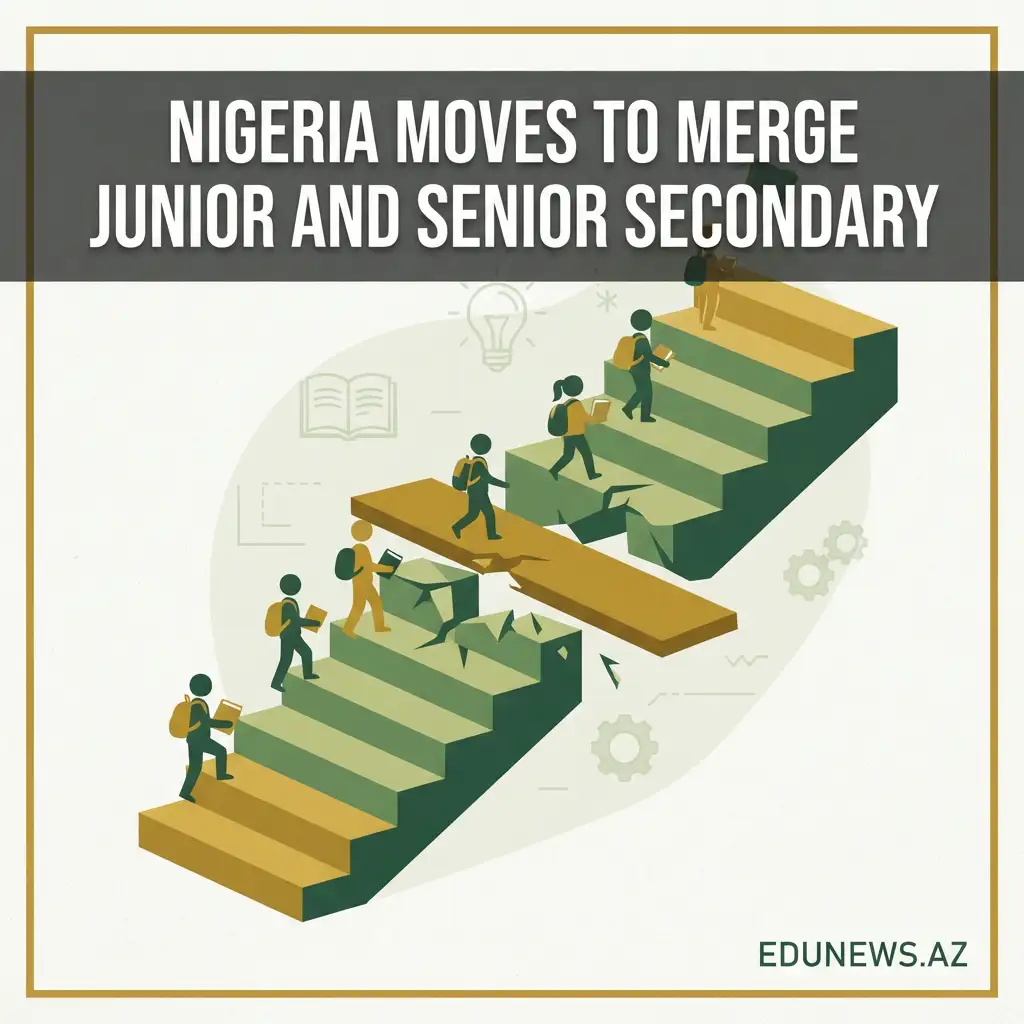
ABUJA — Nigeria's federal government has proposed ending the long-standing separation between Junior Secondary School (JSS) and Senior Secondary School (SSS), merging them into a single continuous secondary structure. The move responds to government data showing roughly 20 million Nigerian children have been lost from the education pipeline specifically at the transition point between JSS and SSS — a gap officials say the current two-tier system itself has helped create, since it requires students to sit a fresh transition exam and re-enroll rather than progressing automatically.
Under the current structure, many students who complete junior secondary school never make the jump to senior secondary at all, whether due to the cost of new enrollment, disruption in the transition process, or simply falling out of the system during the administrative gap between the two tiers. Merging the two into a single, continuous secondary school model — closer to the K-12 systems many other countries operate — is intended to remove that structural drop-off point and keep students moving through school without a break that too easily becomes permanent.
The proposal lands alongside a wave of other Nigerian education stories this week: the Joint Admissions and Matriculation Board (JAMB) has begun its 2026 Unified Tertiary Matriculation Examination adjustment process for university-bound students, while Nigeria and Singapore have launched a joint program training Nigerian technical and vocational education (TVET) teachers to strengthen the country's tech and trade-skills pipeline — suggesting a broader push to fix both the structural dropout problem in secondary school and the technical-skills gap further down the pipeline at the same time.
Education researchers note that Nigeria's dropout problem is not evenly distributed: separate reporting this week found Nigerian secondary schools facing what's being described as a "boy-child crisis" in enrollment patterns, a regional dimension that will likely shape how the JSS-SSS merger is implemented differently across Nigeria's 36 states and the Federal Capital Territory. For a country with a school-age population well over 200 million, even a structural fix aimed at a single transition point has consequences that ripple across one of the largest education systems in the world.