Today, the US Ends a 30-Year-Old Immigration Norm for International Students — Here's What Actually Changes
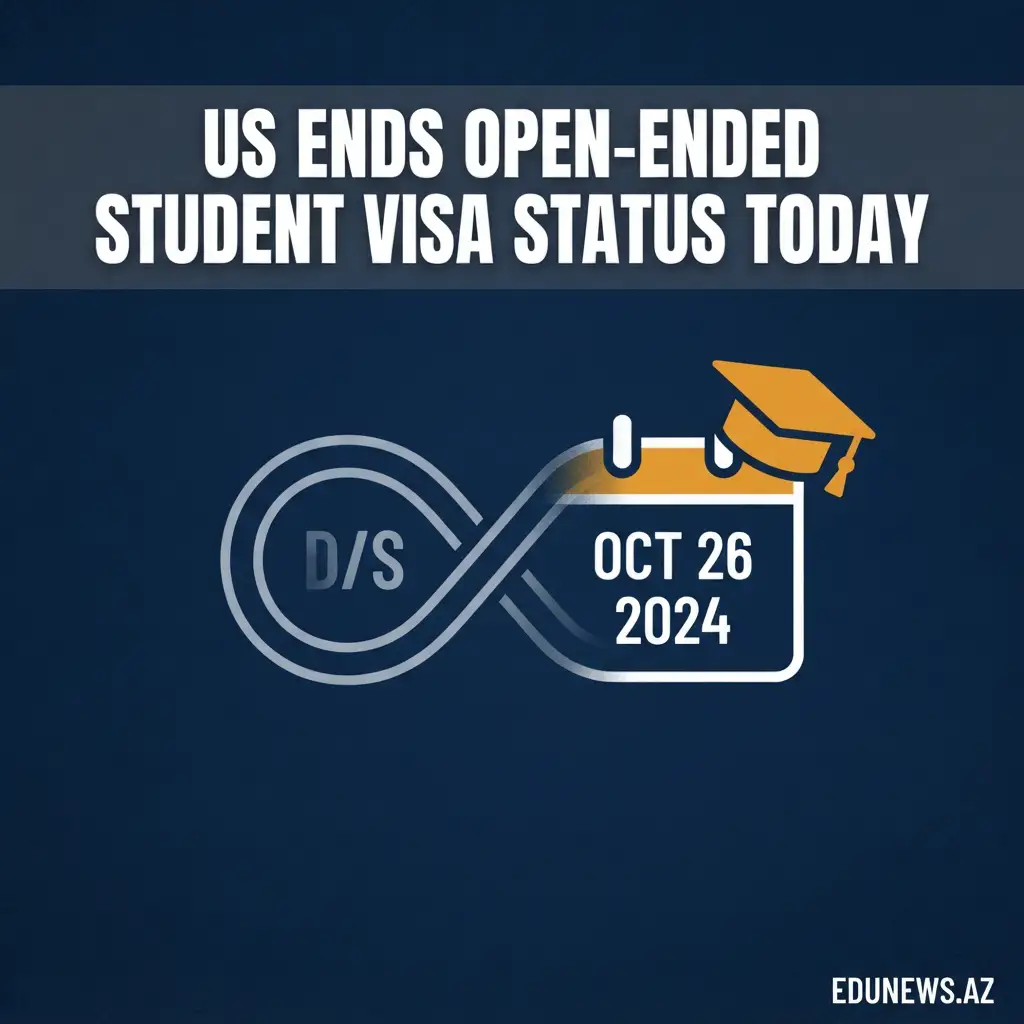
WASHINGTON — As of today, September 15, 2026, F-1 international students, J-1 exchange visitors, and I-visa foreign media representatives entering or re-entering the United States will no longer be admitted for "Duration of Status" — the open-ended framework that, for more than three decades, let students remain in the country for as long as they kept making genuine progress toward their degree, regardless of how many years that actually took. In its place: a fixed admission period tied to a specific "Admit Until Date," capped at four years for most students, after which anyone still enrolled must file for a formal Extension of Stay and pass what DHS describes as "rigorous vetting."
The rule, published in the Federal Register on July 17 and now taking effect on schedule after its 60-day implementation window, closes a chapter this site has been tracking since late July, when the Trump administration first floated a parallel $100,000 fee on the OPT work-authorization program that typically follows a student visa. Where that OPT fee proposal targeted what happens after graduation, today's rule targets something more fundamental: how long a student is legally allowed to still be a student in the first place. Read together with last month's sudden narrowing of CPT internship rules — the memo that had UCLA, UC Berkeley, and UC San Diego pausing work-authorization approvals within days — today's implementation completes a third and arguably most consequential piece of the same broader restructuring: tightening internships, tightening post-graduation work, and now tightening the basic clock on how long someone can remain enrolled at all.
The four-year cap creates an immediate, mechanical problem for one specific population: doctoral students. A PhD in psychology typically takes five to seven years to complete, according to National Center for Science and Engineering Statistics data cited by the scholarly advocacy group FABBS — meaning the typical doctoral timeline, not an unusual outlier case, now exceeds the default admission period by one to three years as a matter of course. Every international PhD candidate in the US, under this rule, becomes someone who will eventually need to successfully navigate an extension application simply to finish a normal-length doctoral program — not because anything went wrong with their studies, but because the government's default clock and academia's actual timeline were never the same length to begin with.
DHS has built in transition protections that soften the rule's initial impact, and the details matter for anyone currently enrolled: students already in the US under the old Duration of Status framework as of today can remain until either their program's stated end date or four years from today, whichever comes first, without needing a corrected admission document immediately — but if that same student travels internationally and re-enters the US after today, they'll be issued a new, fixed-date admission record on re-entry, effectively pulling them into the new system the moment they cross the border again. Students filing for post-completion OPT or STEM OPT by March 18, 2027 get a specific additional carve-out, letting them skip a separate Extension of Stay application. The rule is also formally classified as a "major rule" subject to Congressional Review Act oversight, meaning Congress retains a narrow, rarely-used path to delay or overturn it — and at least one lawsuit challenging the rule has already been filed, according to university immigration offices tracking the rollout, leaving today's effective date real but not necessarily final.
International education advocates, including NAFSA and individual university international offices from Ohio State to Pitt to Yale, have spent the rule's two-month implementation window warning about compounding practical effects beyond the headline four-year number: the rule also introduces a new regulatory concept DHS calls "educational objectives" — generally a student's declared major or degree level — and restricts how freely students can change majors, transfer institutions, or add a second program of study without triggering fresh scrutiny of their admission timeline. University advisors interviewed by outlets tracking the story this month describe a genuine, active fear underneath the paperwork changes: that the accumulating uncertainty and administrative burden could simply push prospective international students toward competing destinations rather than absorbing years of extension-application risk to study in the US at all — precisely the dynamic this site documented last month when reporting on Canada's coordinated push to recruit scientists directly away from Harvard, MIT, and Yale.
For Azerbaijani students and the advisors, education consultants, and returnee networks that help send them toward American campuses each year, today marks the point where "US student visa policy is getting more complicated" stops being an abstract trend line and becomes a concrete admission document with a specific expiration date. The practical guidance mirrors what this site relayed last month during the CPT rule's rollout: talk to your institution's international student office before making any assumptions about your remaining time in the US, particularly if your program runs anywhere near or beyond four years, and build in the real possibility of needing to file — and win — an extension application partway through a degree that, a month ago, would have simply run its course under the old open-ended framework without any such requirement at all.